A cada canto um acanto, e no meio!
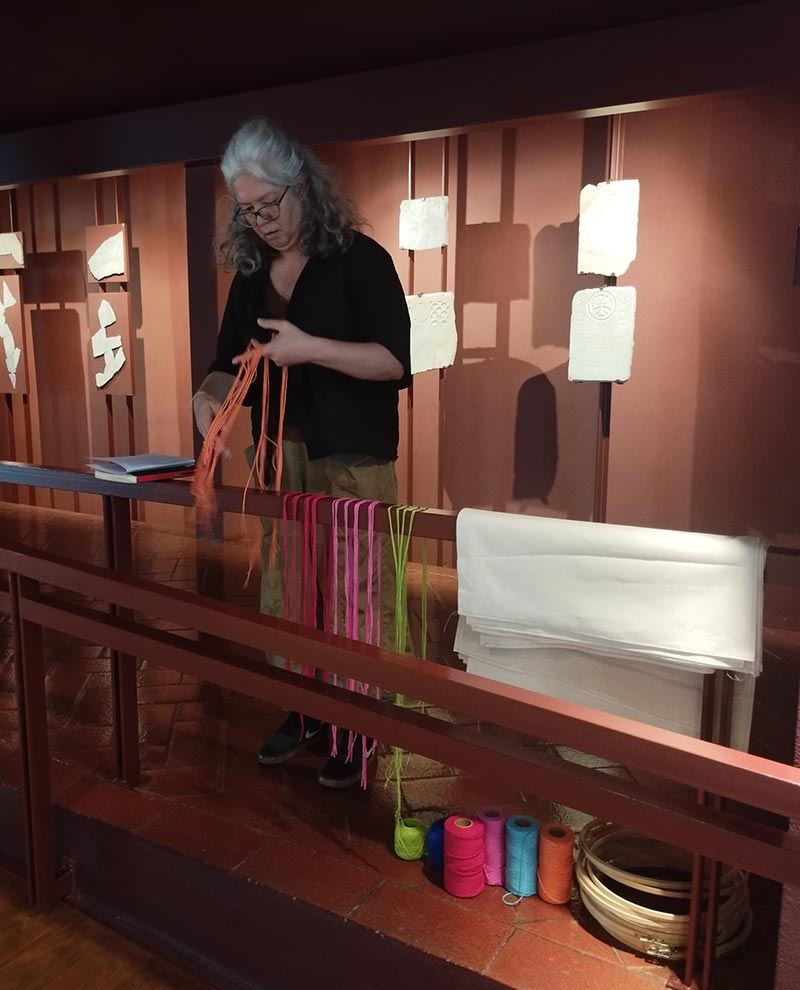
The creative workshops developed within the scope of the exhibition O Sorriso do Acanto, held between April 20 and 24, 2026, at the Palaeo-Christian Basilica site of the Mértola Museum Cláudio Torres, involved eight classes from the 1st, 2nd, and 3rd cycles of the Mértola School Cluster. The initiative formed part of an artistic and cultural mediation programme with the artist Sara Domingos, combining contemporary art and archaeological heritage, with the Mediterranean serving as the backdrop for exploring the concept of the ‘in-between’. In this context, the activities sought to encourage the decentralization of perspective and collaborative work.
Aligned with contemporary artistic education strategies, the activities provided direct contact with heritage and with the creative process within a museum context, promoting access to art. Under the theme At every corner, an acanthus — and in the middle too! (A cada canto um acanto, e no meio!), the programme included a guided visit to the exhibition, which framed the practical activities and encouraged reflection on the relationship between nature, art, and culture, as well as on the connections between different historical and cultural contexts.
The activities were organized into two formats:
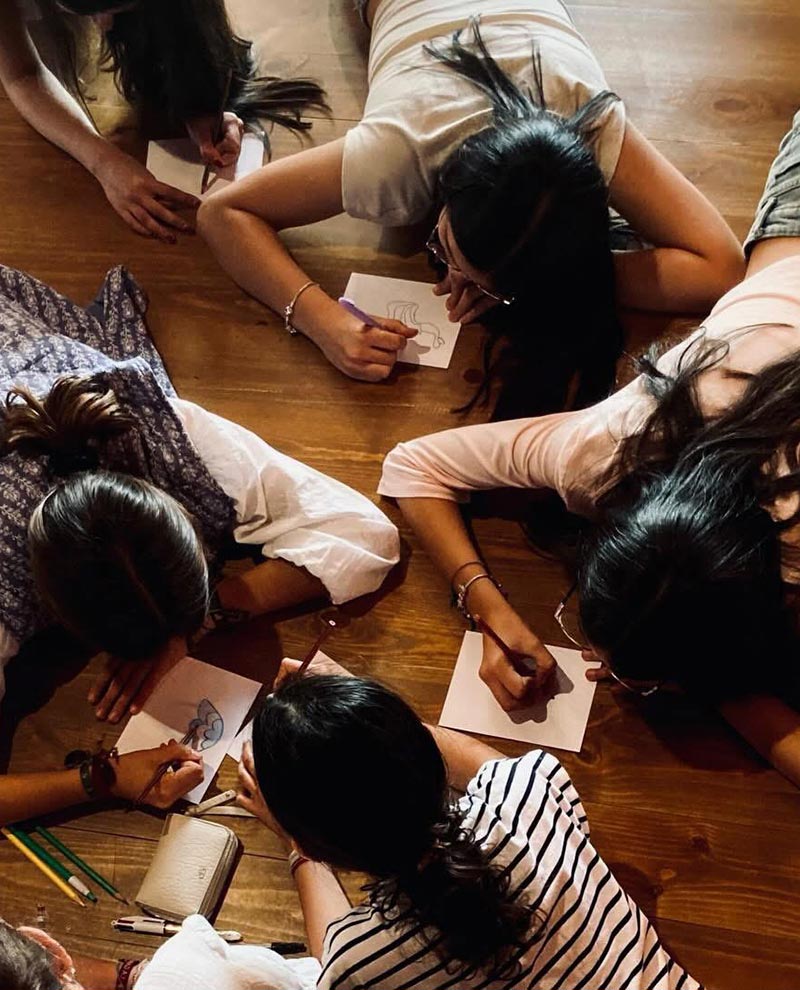
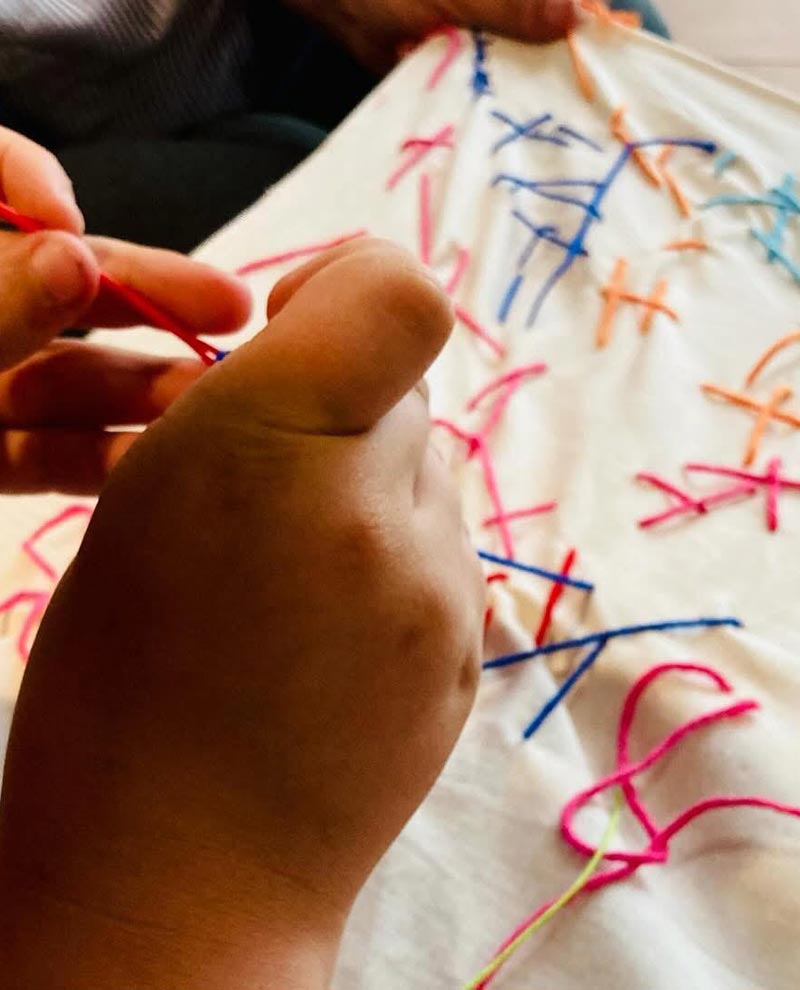
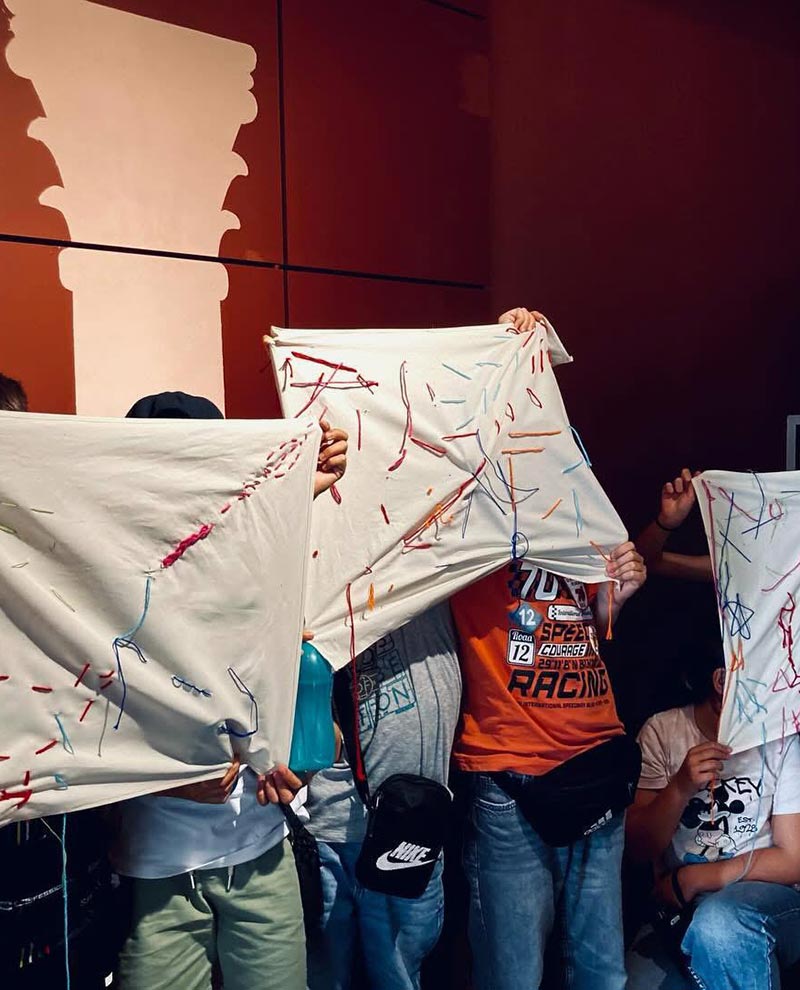
– Creative workshop (1st and 2nd cycles): aimed at 4th and 5th year classes, organised into groups of four students, participants were challenged to create a collective drawing on fabric using needle and thread. The use of unconventional materials served as a shared starting point, encouraging attention to detail and difference. This approach fostered a shared creative experience, promoting cooperation and the joint construction of the visual outcome. In some cases involving intergenerational participation, the narrative dimension and the sharing of experiences were further strengthened.
– Interpretive pathway (3rd cycle): aimed at 7th year classes, this activity focused on dialogical observation of the exhibition through guided reading and collective discussion, as well as the exploration of History-related content, namely the Late Antiquity context of the Palaeochristian Basilica, and issues relating to the circulation of symbols, cultural diversity, and the transformation of meanings over time. At the end, pupils were invited to undertake an interpretative exercise exploring more abstract concepts such as ‘intermediate places’ or the ‘in-between’.
Overall, pupil participation was positive. In the workshops for the 1st and 2nd cycles, pupils showed openness to experimentation and increasing autonomy, despite some difficulties with group work dynamics. In the 3rd cycle, participation revealed varying levels of attention and engagement, highlighting the need for pedagogical strategies adapted to this level of education. The understanding of more abstract concepts revealed different levels of conceptual maturity, underlining the importance of allowing more time for reflection in order to consolidate learning. The articulation between the theoretical historical component and the creative dimension strengthened the connection between curricular content and the museum experience. This relationship proved particularly relevant for pupils with no previous contact with contemporary art exhibitions.
Particular emphasis should be placed on the role of the accompanying teachers and the coordination of the School Cultural Project, whose collaboration was decisive in the pedagogical mediation, contextualisation of the activities and facilitation of the sessions, as well as in creating conditions conducive to participation and dialogue. The initiative also benefited from the availability of the Mértola Museum Cláudio Torres, which ensured its implementation, including exceptional opening on Monday.
The average duration of the sessions was 90 minutes, which was appropriate to the general structure of the activities, although in some cases it limited the deeper exploration of content and interrupted moments of greater fluency in the practical work. In two 7th year classes, the pathway took place inside the Basilica due to timetable coordination constraints between subjects. By contrast, the interpretative pathway conducted as part of a field trip, lasting 120 minutes, allowed for more in-depth exploration and a more direct relationship between the historical elements observed in situ and the concepts under discussion.
Among the main limitations identified were attention management, cooperation in small groups, and the diversity of levels of dexterity and expressive ability, which required methodological adjustments throughout the sessions and reinforced the importance of allowing more time for experimentation. There was also participation from a 4th year class that had previously taken part in a workshop held at the Islamic Art site in 2024. Although greater ease of adaptation might have been anticipated, challenges in collaborative dynamics were observed, highlighting the complexity of these group work processes. The initial unfamiliarity with some of the content suggests that a longer period of experimentation could have fostered greater interpretative freedom and a deeper appropriation of the themes explored, reinforcing the relevance of proposals that engage pupils in situations of challenge and exploration of unfamiliar artistic languages.
In summary, the creative workshops associated with ‘O Sorriso do Acanto’ demonstrate the relevance of mediation models that combine contemporary artistic practices, heritage, and education within a museum context. Developed from works by the artist presented at the Palaeo-Christian Basilica of the Mértola Museum Cláudio Torres, and inspired by the local archaeological collection, the activities provided direct contact with artistic practice and heritage, promoting the exploration of materials, images, and narratives in dialogue with the exhibition. This process confirms the relevance of artistic mediation as a means of bringing pupils closer to heritage. The continuation of this type of initiative is essential to strengthening the relationships between school, museum, and territory, contributing to the consolidation of learning through practical experience and artistic creation.