



Issue 5 of the journal Revista de Museus, published in April 2026, marks 50 years of freedom and democracy in museums. The issue, edited by Clara Frayão Camacho, focuses on the new perspective on the public museum policies that democracy made possible in Portugal, a perspective based on critical analysis and on the well-known UNESCO Mission led by Per-Uno Ågren, which took place between 1976 and 1979.
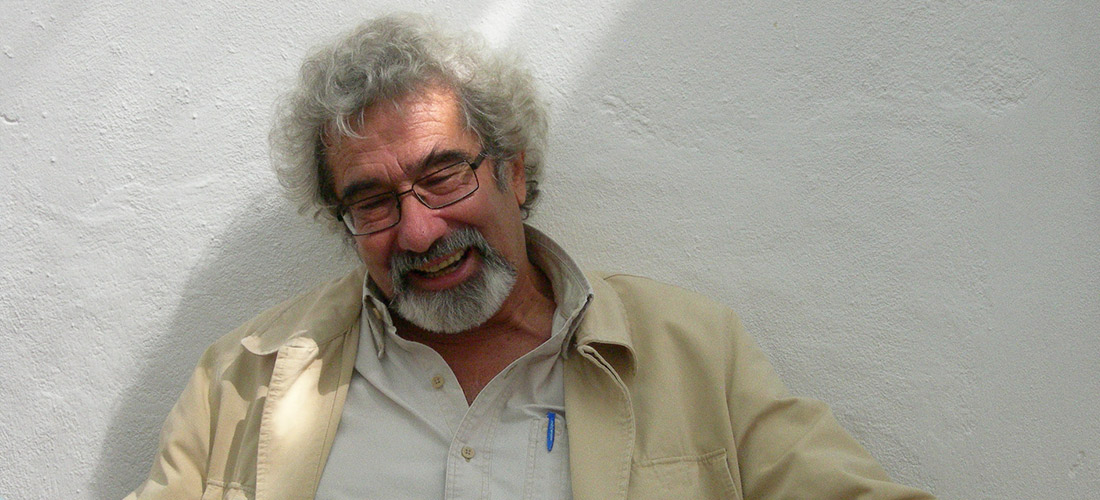
With regard to Cláudio Torres, the issue notes that he associates “museology and research with the broadening of the scope of heritage and with the development of territories far from the coast. A revolutionary look at the inland Alentejo is the keynote of Miguel Rego’s article ‘Cláudio Torres: You Don’t Debate Museology, You Practise It!’ With the territory of Mértola at the centre of a wide-ranging process of historical construction, marked by openness to the Islamic presence and by the central role of exhibitions as a means of justifying the scientific project to the community, Cláudio Torres’s unique work at the Mértola Museum demonstrates the potential for territorial transformation and local development anchored in heritage and in the Museum”.
For Miguel Rego, “difficulties aside, in this inland Alentejo region, the reality associated with the museum complex is the result of a process that began in 1978 under the guidance and inspiration of Cláudio Torres, who, through all manner of vicissitudes, gradually built a project in the field of cultural and landscape heritage, a flagship that cannot be overlooked whenever one lists projects in ‘deep Portugal’ devoted to safeguarding, dignifying, exhibiting and studying memory and identity.
Breaking out beyond the walled enclosure of the historic centre (because Cláudio Torres’s project did not settle into the all-too-comfortable armchair of beauty, history and ambience that the old town of Mértola offered), Mértola’s group of museums takes on, in this context, an essential role in the identification of the ‘scientific and cultural project’. But equally in developing the community’s sense of belonging to its territory and in enhancing the urban fabric. A detail of no small importance, now understood as a key driver of the municipality’s economic life, as a magnet for thousands of tourists.
(…) In all the museum projects in which he is involved, Cláudio Torres is not only the museologist, so often tagged with the ‘agitprop’ label, but also the architect, the designer, the photographer, the content producer. And in so doing, he brought to museology after the 25 April 1974 revolution the idea that ‘it is possible’. It is possible to carry out research and present it to ordinary citizens; to enhance and dignify the identity of each place by promoting its local distinctiveness; to adapt practice to the resources available.
The university lecturer whom the School of Arts and Humanities of the University of Lisbon let go for ‘bureaucratic’ reasons brought to museology a methodology of intervention that carries the project into the 21st century, in a kind of constant dialogue between the scientific team, local stakeholders and organisations, and the community. And here, the stage par excellence for showcasing the work carried out is, undoubtedly, the Museum. And museological discourse, as he often said, is not something you debate: you practise it!”.